Adaptive Reuse + Timber
When considering mass timber as a solution to augment adaptive reuse projects, a hybrid approach is often the best strategy. It allows you to leverage the strengths of the existing structure, integrate new pass-through lateral systems such as elevators and stair components, and benefit from an independent typical floor column grid set by the timber module. This way, no single system is compromised for the efficiency of another.
That is the beauty of a timber system: it’s light enough to transfer at what is commonly known as a table slab.
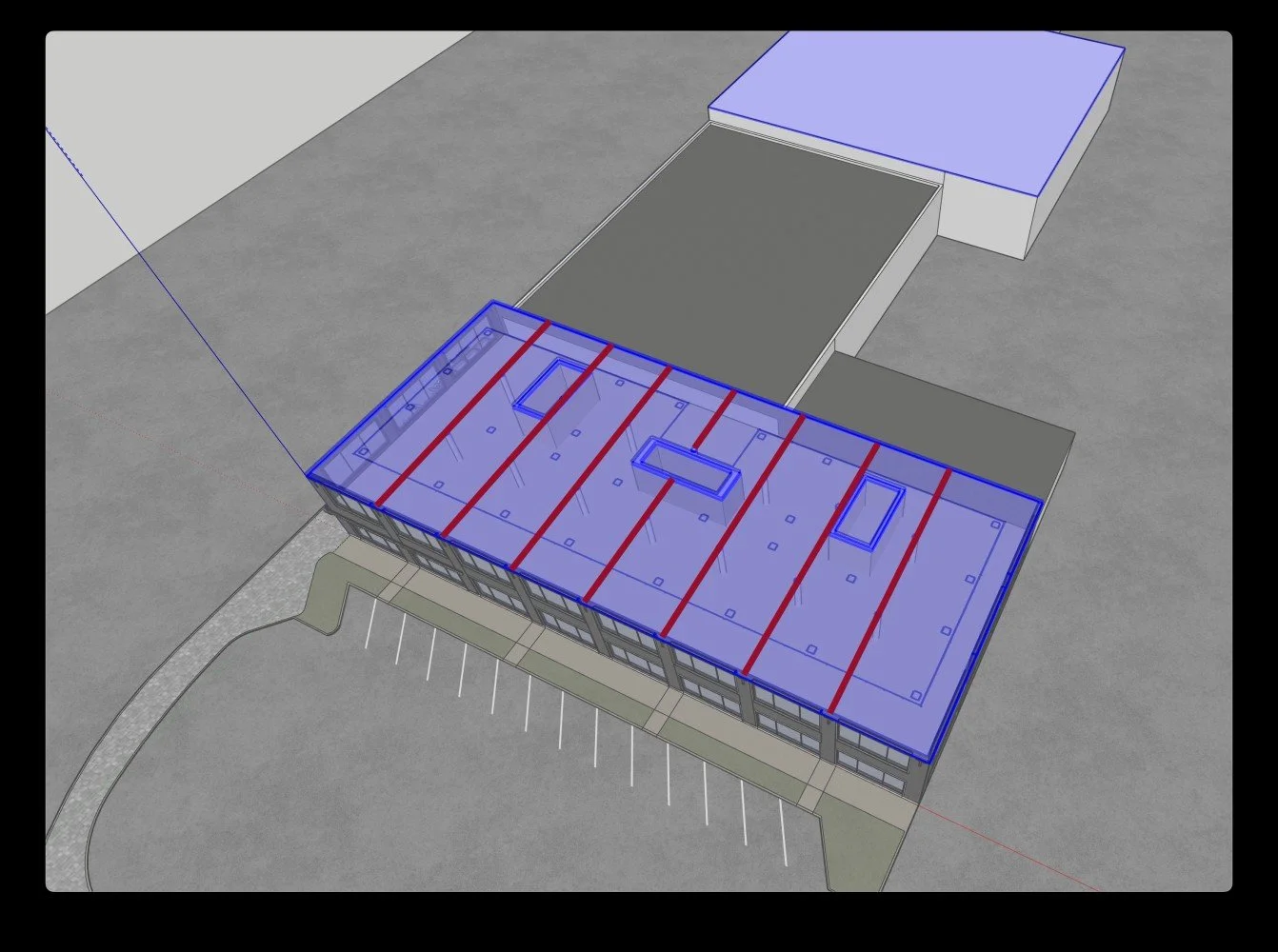
Reinforced concrete and steel beams with a new concrete table slab above allow flexibility in the new timber column grid atop.
In buildings like 183 N York, the existing slab is a one-way reinforced system over joists and beams. Large internal columns are spaced evenly throughout the space, making it an ideal candidate to extend above the existing roof level and form a separate table slab / steel grillage that supports the optimal timber grid above.
Eleven-foot clear ceilings and the rich texture of the historic concrete bring an abundance of natural light and unique character to the loft space below.
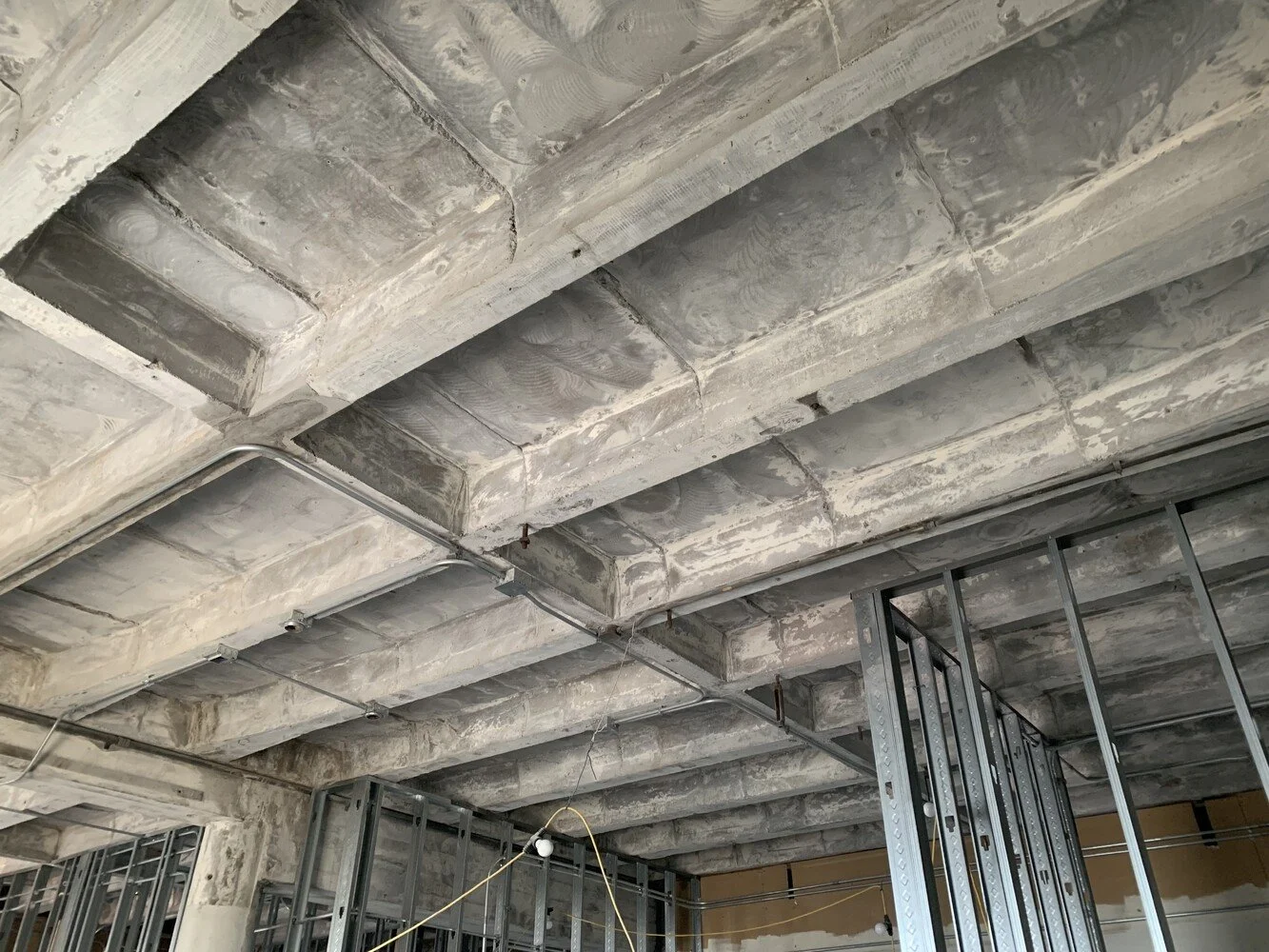
Existing slab and joist system. They don't make em like this anymore.
Having the ability to reset the timber grid in a multifamily residential development gives the designer maximum flexibility for unit space planning; however, they must remain mindful of the complexities that arise from all the intersections and potential clashes between the timber structure and the layout.
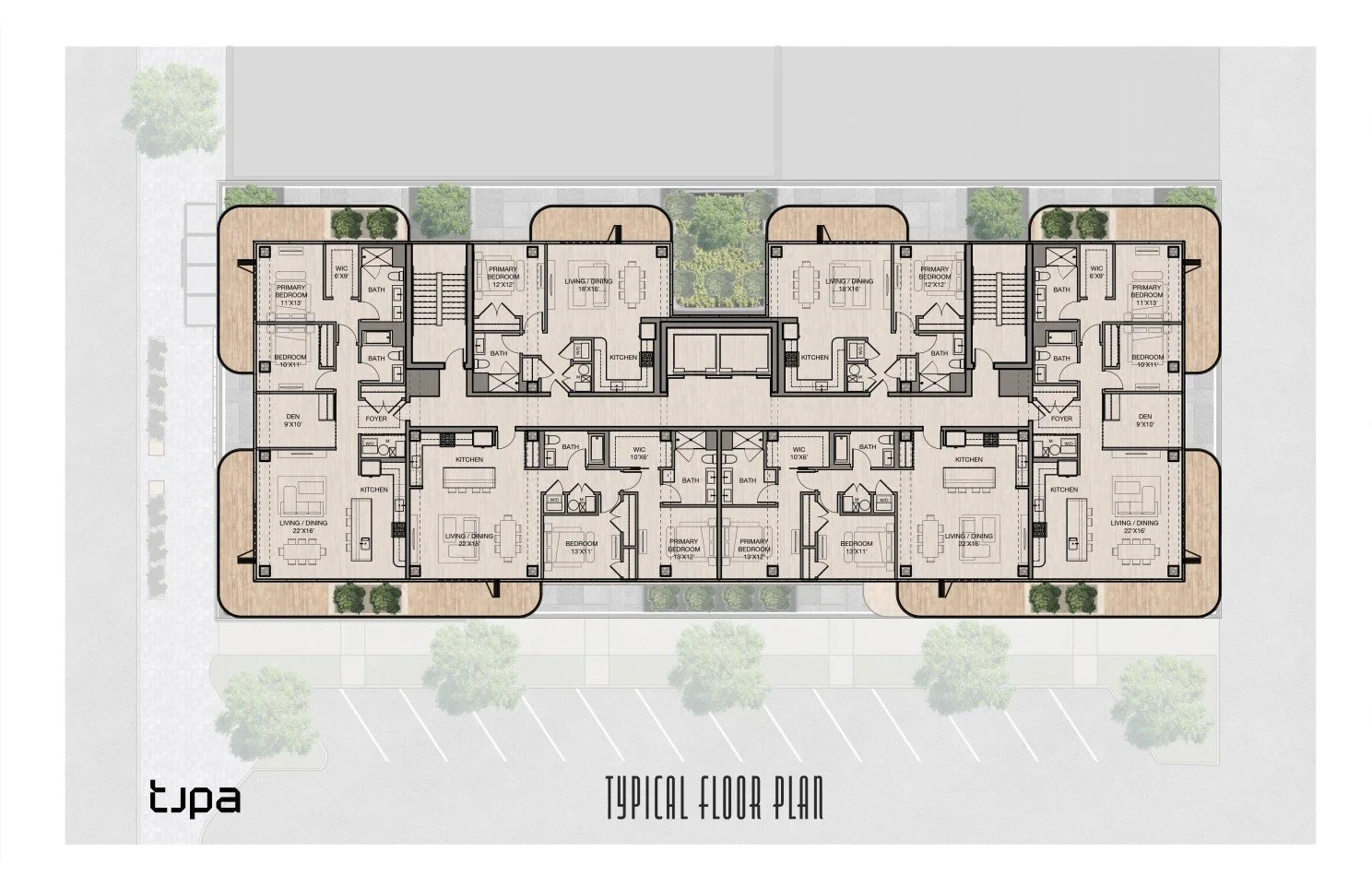
183 N York | Typical Floor Plan Layout, mix of 2 Bedroom+Den, 2 Bedroom, and 1 Bedroom Units.
I’m a big believer in working with AI-supported imagery. While it’s not perfect (yet), it allows designers to quickly cycle through ideas early on and generate the look and feel of a space that supports their big-picture vision.
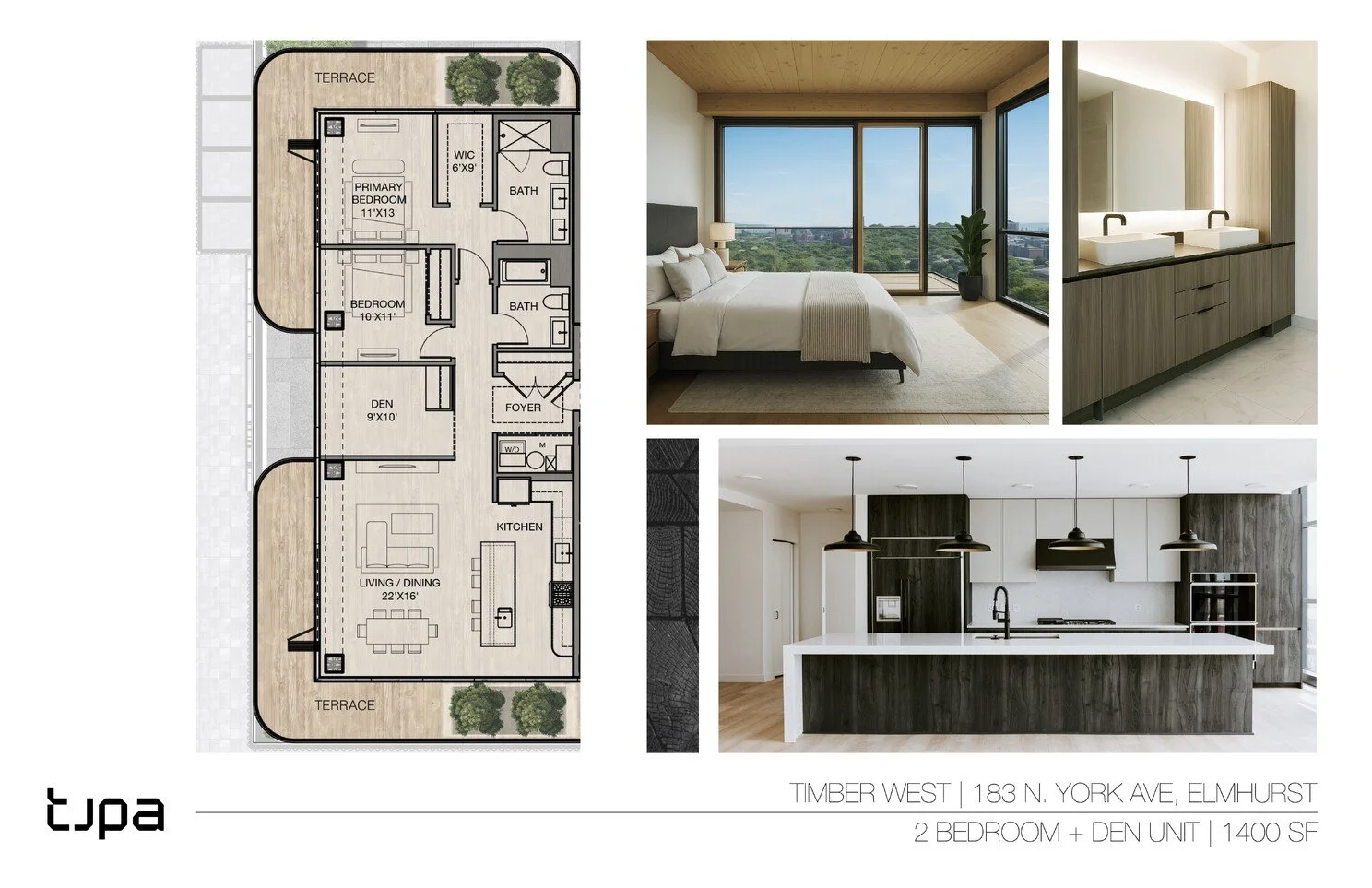
183 N York | 2 Bedroom + Den Unit
Using beams to frame spaces, windows, and wall features is a great way to showcase the beauty mass timber. Allowing demising walls to clear to one side of a beam great practice in multifamily timber design which helps avoid some of the complexities in fire-rating and wall intersections. It also results in a much cleaner, easier-to-build detail.
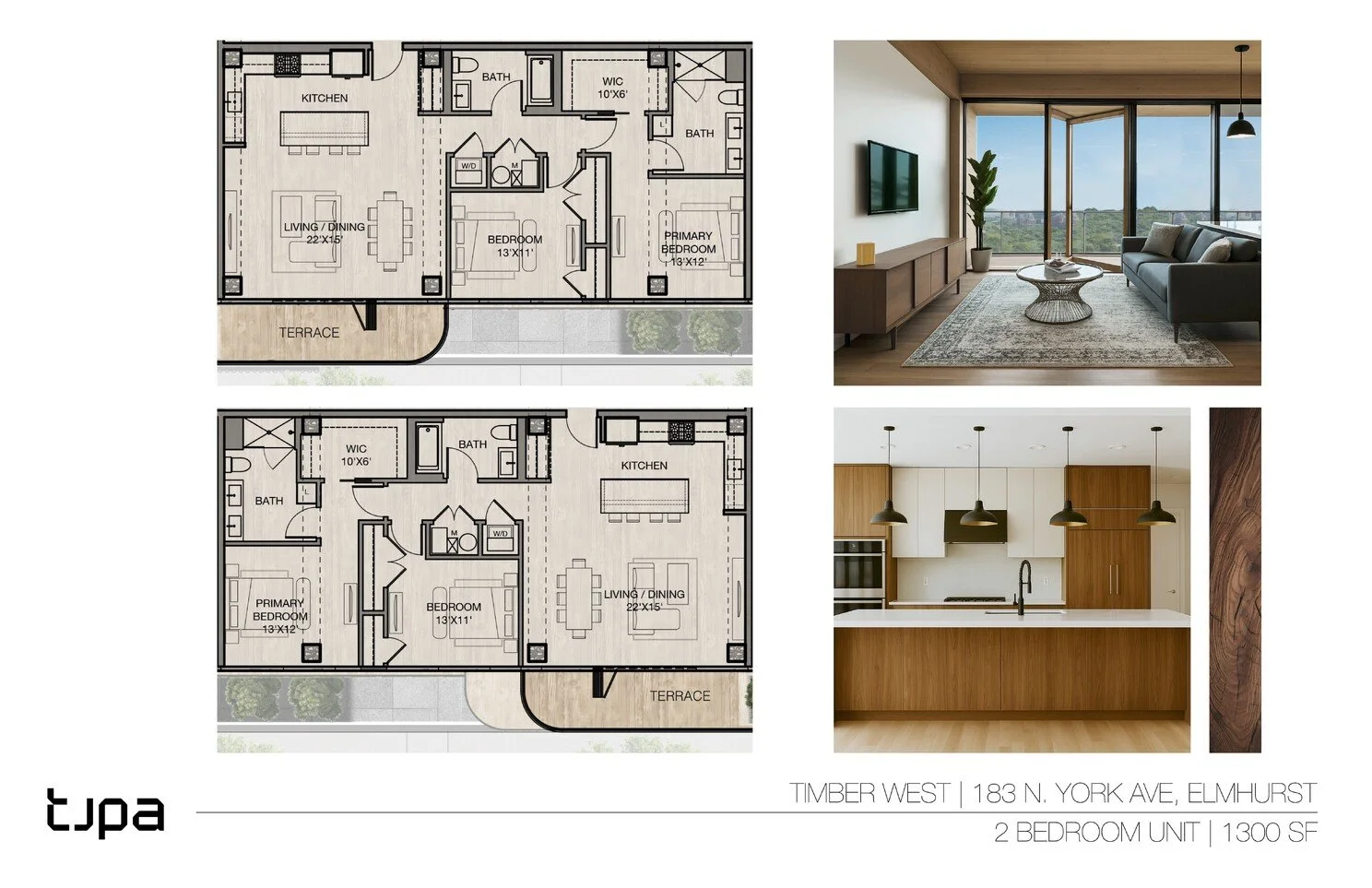
183 N York | 2 Bedroom + Den Unit
Beam and CLT deck span direction is critical during the layout phase. Understanding how to avoid MEP riser conflicts when setting span directions will significantly increase the likelihood of achieving a clean and functional unit layout.
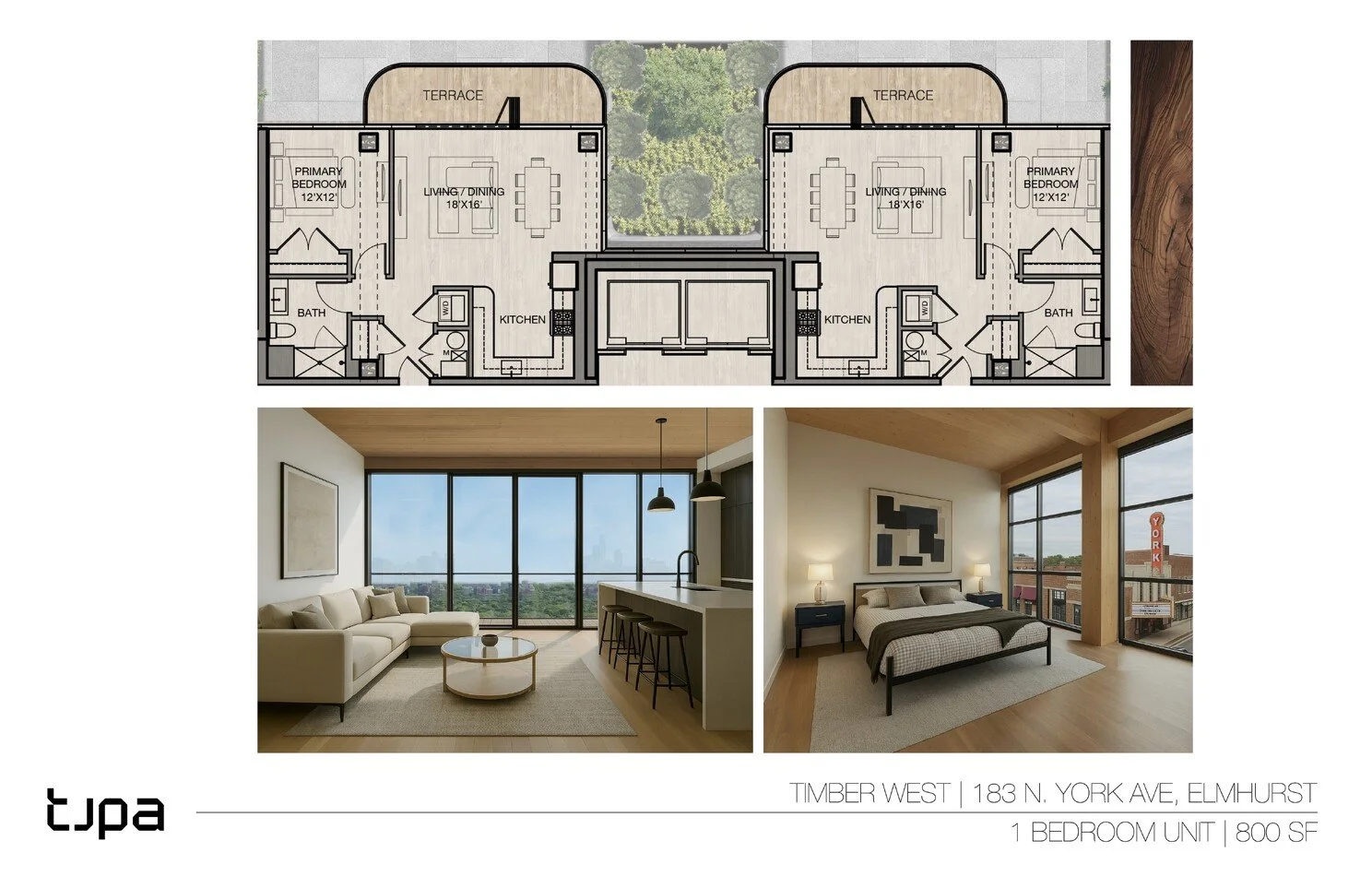
183 N York | 1 Bedroom Unit
Understanding how columns, beams, and decking details must work in harmony—embracing simplicity, alignment, and symmetry—is essential in timber construction. Repetition in details and interior architecture that respects and aligns with the principles of timber construction is key to achieving a well-designed floor plan and ensuring the sound financial execution of the development.
My well-grounded insight and hands-on experience help drive successful projects in this market.
Wanna talk adaptive reuse + timber? Let’s chat.
More News